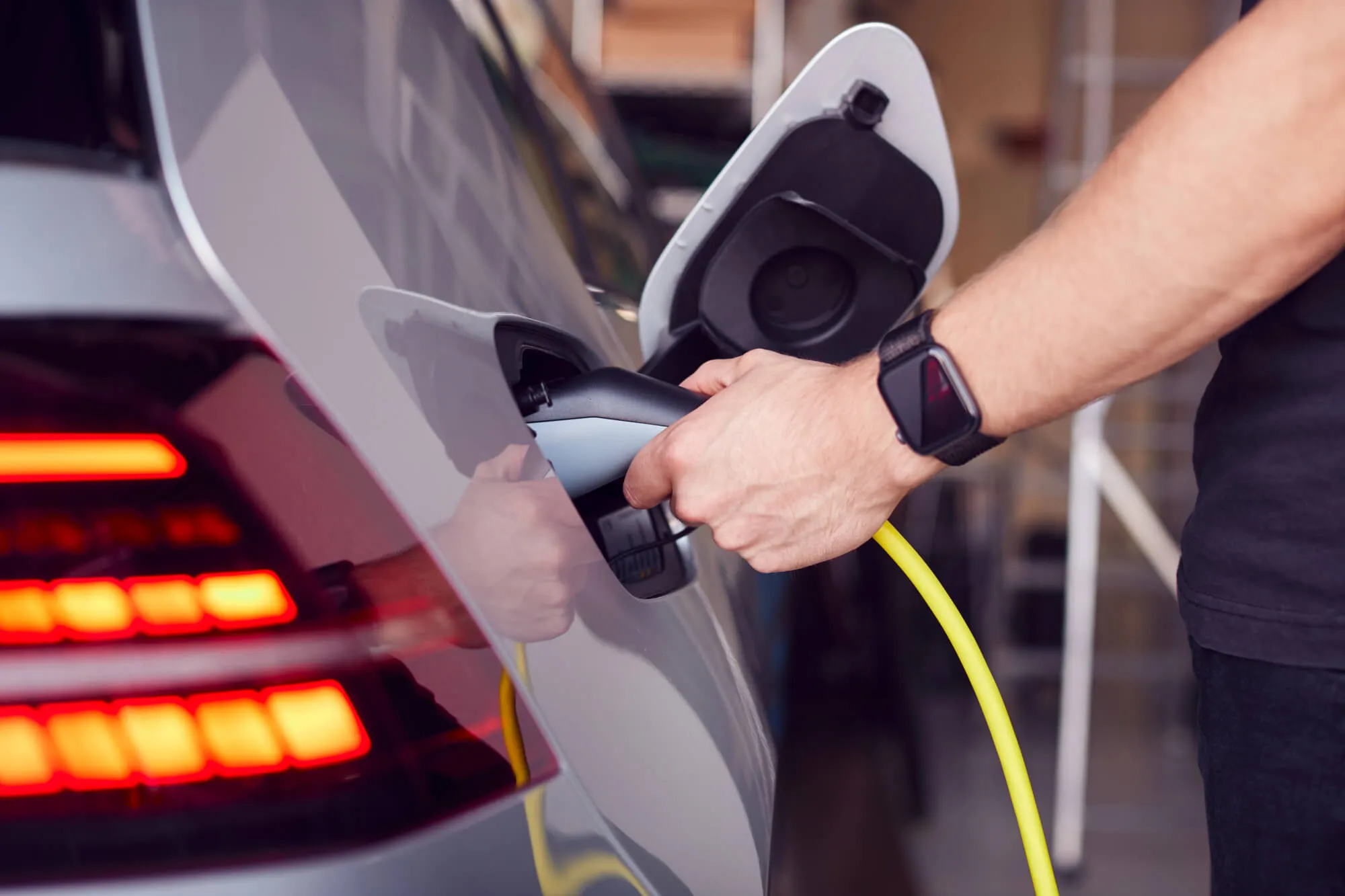
Charging an EV at home in North Carolina costs a fraction of what gas costs. At current rates, the average EV driver saves $1,400 to $1,700 per year on fuel compared to driving an average gas car.
The math is straightforward once you have the real numbers. Here they are.
What electricity and gas cost in NC right now
North Carolina’s average residential electricity rate is 16.00 cents per kWh as of March 2026, per the EIA’s Electric Power Monthly. This is a weighted average across Duke Energy Progress and Duke Energy Carolinas territories.
There’s a meaningful split between the two utilities. Duke Energy Progress customers in eastern NC pay approximately 16 cents per kWh implied on a typical bill. Duke Energy Carolinas customers in the Charlotte area pay approximately 15 cents. The EIA statewide average is the cleaner figure for a general comparison.
NC’s average regular unleaded gas price is $4.125 per gallon as of May 5, 2026, per AAA.
Charging vs. gas: the scenario tables
These calculations use 13,476 miles per year (the national average from FHWA Highway Statistics data), EPA-rated efficiency for each vehicle, and two electricity rate scenarios: the standard residential rate and Duke Energy’s off-peak time-of-use rate for overnight charging.
Annual fuel and charging cost
| Vehicle | EPA efficiency | Annual cost (standard 16.00¢/kWh) | Annual cost (off-peak ~10¢/kWh) | Annual savings vs. avg gas car |
|---|---|---|---|---|
| Hyundai Ioniq 6 SR | 4.0 mi/kWh | $539 | $337 | $1,506–$1,708 |
| Chevy Bolt EV | 3.57 mi/kWh | $604 | $378 | $1,441–$1,667 |
| Tesla Model Y LR AWD | 3.45 mi/kWh | $625 | $391 | $1,420–$1,654 |
| Ford F-150 Lightning ER2 | 2.13 mi/kWh | $1,012 | $633 | $1,033–$1,412 |
| Average gas car (27.2 MPG) | n/a | $2,045 | n/a | baseline |
| Gas pickup (~18 MPG) | n/a | $3,088 | n/a | $1,043 more than avg |
Monthly cost at a glance
| Vehicle | Monthly (standard rate) | Monthly (off-peak TOU) |
|---|---|---|
| Ioniq 6 SR | $45 | $28 |
| Bolt EV | $50 | $32 |
| Model Y LR AWD | $52 | $33 |
| F-150 Lightning ER2 | $84 | $53 |
| Average gas car | $170 | n/a |
Gas figures use 27.2 MPG (EPA Automotive Trends Report 2025, model year 2024 average) and $4.125/gallon (AAA, May 2026). Pickup uses approximately 18 MPG. EV figures use EPA-rated efficiency from fueleconomy.gov. The off-peak TOU rate of approximately 10 cents per kWh applies to Duke Energy Progress Flex Savings Option customers. Duke Energy Carolinas customers have a separate TOU plan with its own off-peak rate. Both rates are approximate and subject to change. Confirm current rates at duke-energy.com.
Cost per mile: the simplest comparison
| Vehicle | Cost per mile |
|---|---|
| Average gas car (27.2 MPG, $4.125/gal) | $0.152 |
| F-150 Lightning ER2 (standard rate) | $0.075 |
| Tesla Model Y LR AWD (standard rate) | $0.046 |
| Chevy Bolt EV (standard rate) | $0.045 |
| Hyundai Ioniq 6 SR (standard rate) | $0.040 |
| Ioniq 6 SR (off-peak TOU, ~10¢/kWh) | $0.025 |
A gas car costs about 15 cents per mile in fuel at current NC prices. An efficient EV charged at home at the standard rate costs around 4 cents per mile. At an off-peak TOU rate, it drops to about 2.5 cents per mile.
The Duke Energy off-peak rate: is it worth enrolling?
Both Duke Energy Progress and Duke Energy Carolinas offer time-of-use rate plans. You set your car to charge overnight, outside of peak hours (roughly 6 p.m. to 9 p.m. on weekday evenings during summer), and pay the off-peak rate for that charging session.
Duke Energy Progress’s Flex Savings Option comes out to approximately 10 cents per kWh off-peak. Duke Energy Carolinas offers a separate TOU plan with its own off-peak rate; confirm the current figure at duke-energy.com before enrolling. For a Model Y driver doing 13,476 miles per year, switching from the standard rate to DEP’s off-peak rate saves about $234 per year. For an Ioniq 6 driver, about $202 per year.
Those are modest savings on their own, but they require no hardware and no meaningful behavior change beyond setting a charge schedule in your car’s app.
The trade-off: TOU plans have significantly higher on-peak rates. Duke Energy Progress’s Flex Savings Option is approximately 28 cents per kWh on-peak. If you regularly need to charge during peak hours, the plan works against you. Most EV owners avoid this easily with overnight scheduling. If your situation requires frequent daytime top-ups, check the full rate structure before enrolling.
To enroll, contact Duke Energy or visit duke-energy.com. The plan names and application process differ slightly between the two utilities.
What these numbers don’t include
Public charging. These scenarios assume 100% home charging. Most EV drivers supplement with some public charging, which costs considerably more. Level 2 public stations often run 25 to 40 cents per kWh. DC fast chargers typically run 40 to 50 cents per kWh. Heavy reliance on public charging narrows the cost gap with gas.
Cold weather. NC winters are mild compared to most of the country, but EV efficiency drops in cold temperatures. You’ll see higher kWh consumption per mile during cold spells. The annual figures above are based on EPA combined ratings, which approximate mixed real-world conditions.
Charging efficiency. A Level 2 home charger is typically 85 to 90% efficient, meaning a small amount of energy is lost as heat during the charging process. EPA’s kWh/100mi ratings are measured at the vehicle, accounting for this loss, so the calculations above reflect real-world home charging rather than just the battery’s capacity.
Chevy Bolt note. Chevrolet discontinued the Bolt EV after the 2023 model year. The 2023 EPA figures are the most recent available and are the correct ones to use for existing Bolt owners. A new Bolt is expected to return for model year 2026; check fueleconomy.gov for the updated rating when it’s available.
If you have solar
Home solar changes the charging math. If your system generates excess power during the day, you can charge your EV for a near-zero marginal cost during periods of solar surplus. The annual savings shown in this guide use Duke Energy grid rates; your actual cost with solar will depend on your system size, daily generation pattern, and NC net metering credits.
If you’re considering both solar and an EV charger installation at the same time, see the guide on doing both at once.
How to calculate your own cost
You need two numbers: your EV’s EPA efficiency in miles per kWh, and your electricity rate.
- Find your EV’s efficiency at fueleconomy.gov: search your model year and trim, find kWh/100 miles, then divide 100 by that figure to get miles per kWh
- Find your electricity rate on your Duke Energy bill, or use the EIA NC average of 16.00 cents/kWh as a baseline
- Multiply: (annual miles divided by mi/kWh) times your rate equals annual charging cost
Example: 12,000 miles per year, Model Y LR AWD, standard rate. 12,000 divided by 3.45 = 3,478 kWh. Multiply by $0.1600 = $557 per year, or $46 per month.