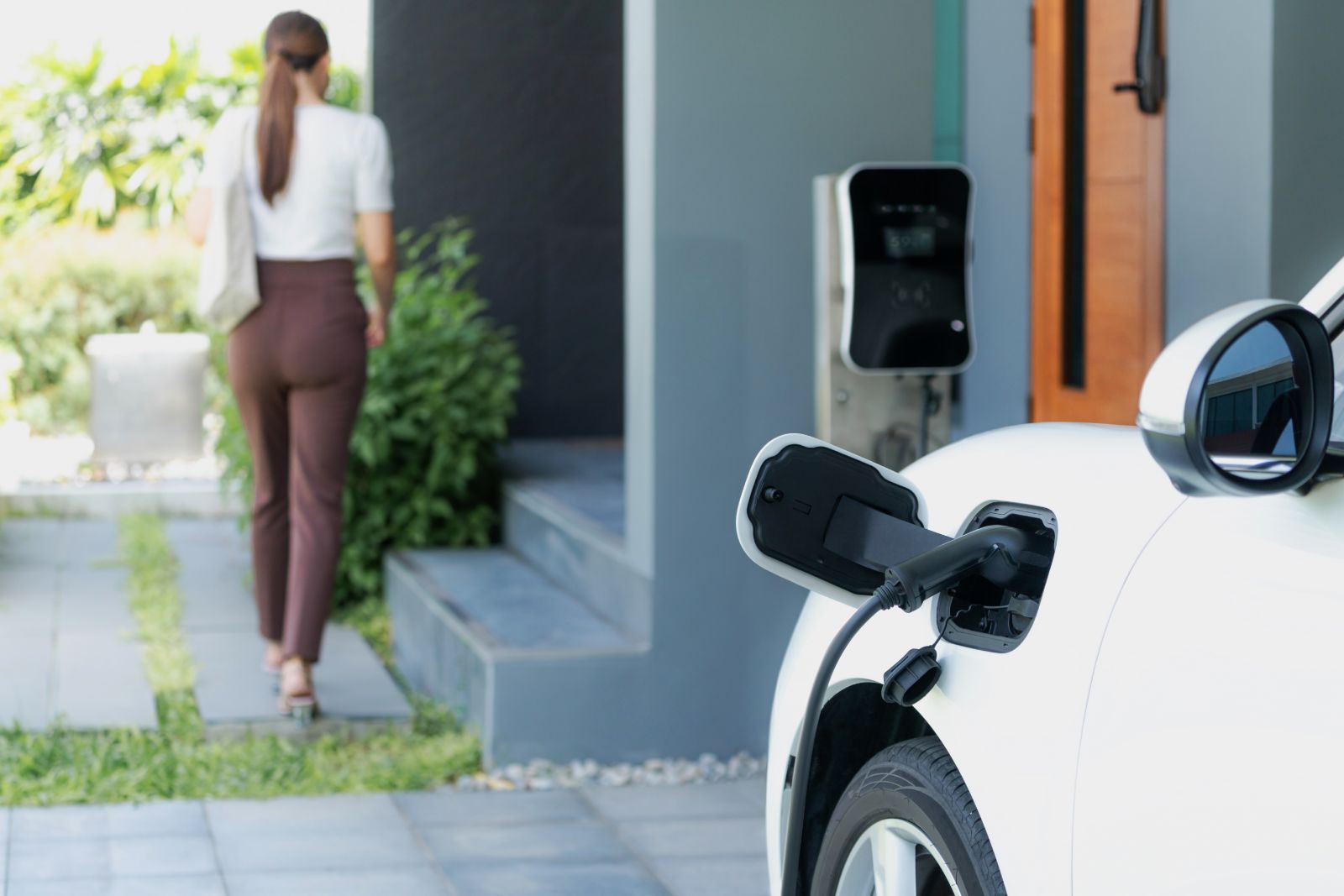
North Carolina has two major electric utilities: Duke Energy Progress in the east and Duke Energy Carolinas in the west. Both offer rebates for qualifying Level 2 EV charger installations. Most homeowners who hire an electrician through a general search never find out the rebate exists. We include that guidance with every lead we pass to an installer.
What Level 2 installation involves
A Level 2 charger runs on a dedicated 240V circuit, adds 20 to 30 miles of range per hour, and makes a near-empty battery ready overnight. The installation is a licensed electrical job: a new circuit breaker, wiring run to the garage or parking area, and either a hardwired charger or a 240V outlet. Your county requires a permit and inspection; your electrician handles both.
Costs in North Carolina
The main cost variables:
- Distance from panel to charger location. A panel in the garage next to where you park is cheaper to wire than one on the other side of the house.
- Panel capacity. Most homes with 200-amp service have room. Older homes with 100-amp service often need upgrading first.
- Charger hardware. A basic hardwired unit starts around $200. Smart chargers with scheduling and monitoring run $400 to $700.
The Duke Energy Charger Prep Credit
Both Duke Energy Progress and Duke Energy Carolinas offer the Charger Prep Credit, which covers up to $1,133 toward the electrical prep work required to support a Level 2 charger. It covers wiring, the breaker, and outlet installation. It does not cover the charger hardware itself. Pre-approval is required before the work starts.
For the full breakdown of how to apply and what qualifies, read the Duke Energy EV Charger Rebate guide.
Permit requirements by county
Every NC county requires an electrical permit for a new 240V circuit. Your electrician pulls the permit before work begins and schedules the inspection afterward. The process is handled as a matter of course by any legitimate electrical contractor. It's not an obstacle.
If an installer offers to skip the permit to save time or money, that is a red flag. Uninspected electrical work affects your homeowner's insurance and can create problems when you sell the house.