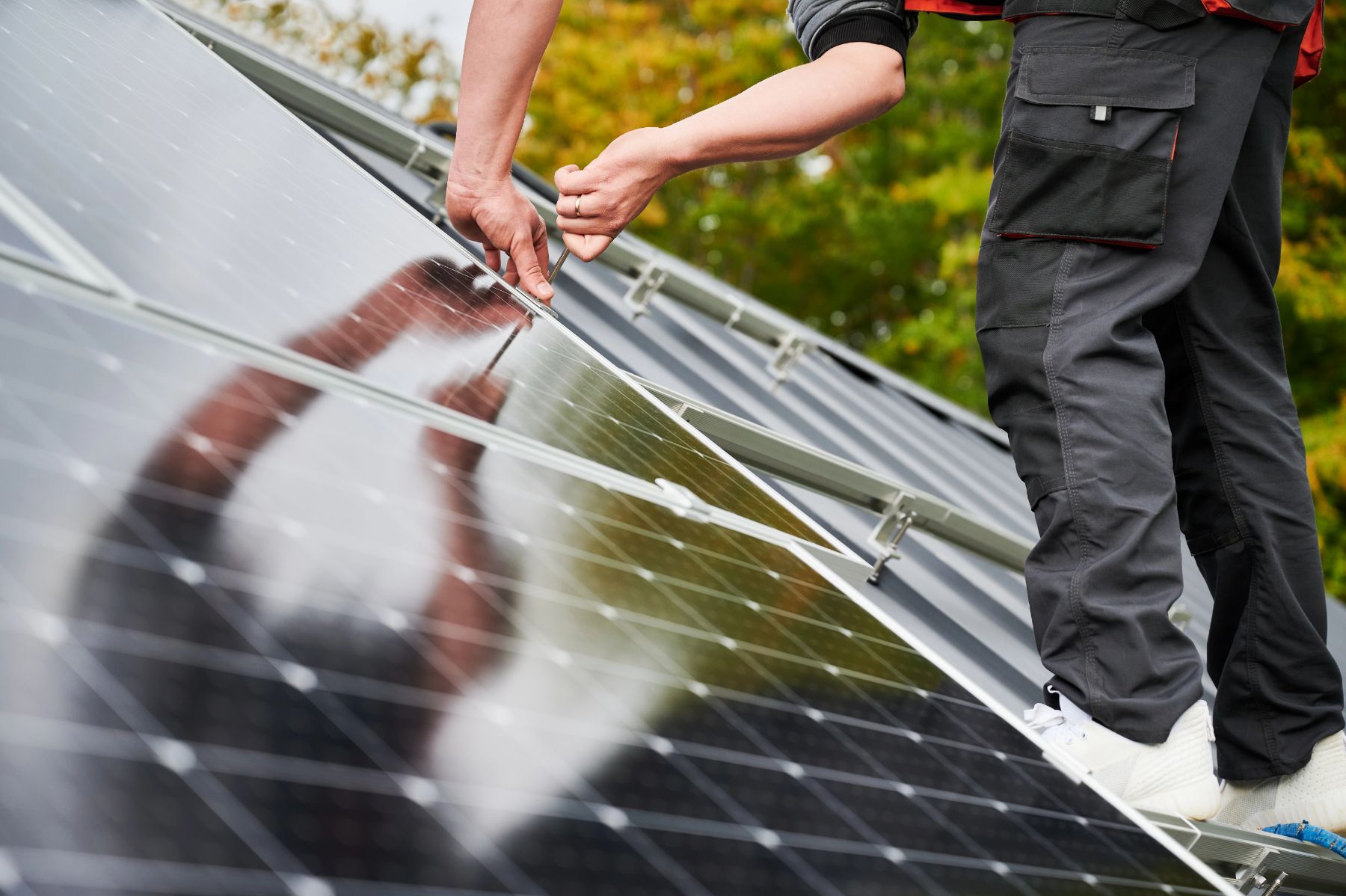
North Carolina ranks among the top ten states for solar installations. The state gets solid sun year-round, Duke Energy offers net metering on both Progress and Carolinas territories, and the PowerPair program provides meaningful upfront incentives for homeowners adding battery storage alongside solar. The payback math has improved significantly over the past five years as panel costs have dropped and utility rates have climbed.
What residential solar installation involves
A solar company assesses your roof orientation, shading, and electricity use to size a system. Panels are mounted on your roof, wired to an inverter, and connected to your home's electrical system and the grid. Your county requires both an electrical permit and a building permit; your installer handles both.
The process from contract to system live typically takes four to eight weeks, mostly permit processing and utility interconnection paperwork. The installation itself usually takes one to two days.
Costs in North Carolina
The main cost variables:
- System size. Sized in kilowatts based on your electricity consumption and roof space. A typical NC home uses 10 to 15 kWh per day, which maps to a 7 to 10 kW system.
- Roof condition and complexity. Steep pitches, multiple angles, or roofs that need repair add cost. South-facing roofs with minimal shading are the most efficient.
- Inverter type. String inverters are less expensive. Microinverters and power optimizers are more expensive but perform better under partial shading.
- Battery storage. Adding a home battery (like a Tesla Powerwall or Enphase IQ Battery) adds $10,000 to $15,000. If you add solar and battery together, the Duke Energy PowerPair program can offset up to $9,000 combined.
Incentives available for solar in NC
The federal residential clean energy credit (Section 25D) expired at the end of 2025 and is no longer available for new installations. The current incentives worth knowing about:
- Duke Energy PowerPair. If you add solar and a battery together, Duke Energy offers $0.36 per watt toward the solar installation (max $3,600) and $400 per kWh toward the battery (max $5,400). Combined maximum is $9,000. Available to both Progress and Carolinas customers. First-come, first-served.
- NC sales tax exemption. Solar equipment is exempt from NC sales tax under G.S. 105-164.13(11b).
- NC property tax exemption. A solar installation does not increase your home's assessed value for property tax purposes under G.S. 105-277.3.
For the full picture on current NC solar incentives, read the NC Solar Incentives guide.
Duke Energy net metering
Both Duke Energy Progress and Duke Energy Carolinas have net metering programs. Power your panels generate but don't use flows to the grid, and you receive a bill credit. On sunny months your bill can drop significantly. On cloudy months or in winter, you draw from the grid as usual.
Net metering terms are set by the NC Utilities Commission and apply to most residential customers with systems under 20 kW.